So You Want to Be an STMS?
If you've spotted an STMS role advertised with TMNZ and you're wondering whether it's the right fit for you, this guide breaks down exactly what the job involves and what we look for in candidates that actually gets noticed.
What Is an STMS?
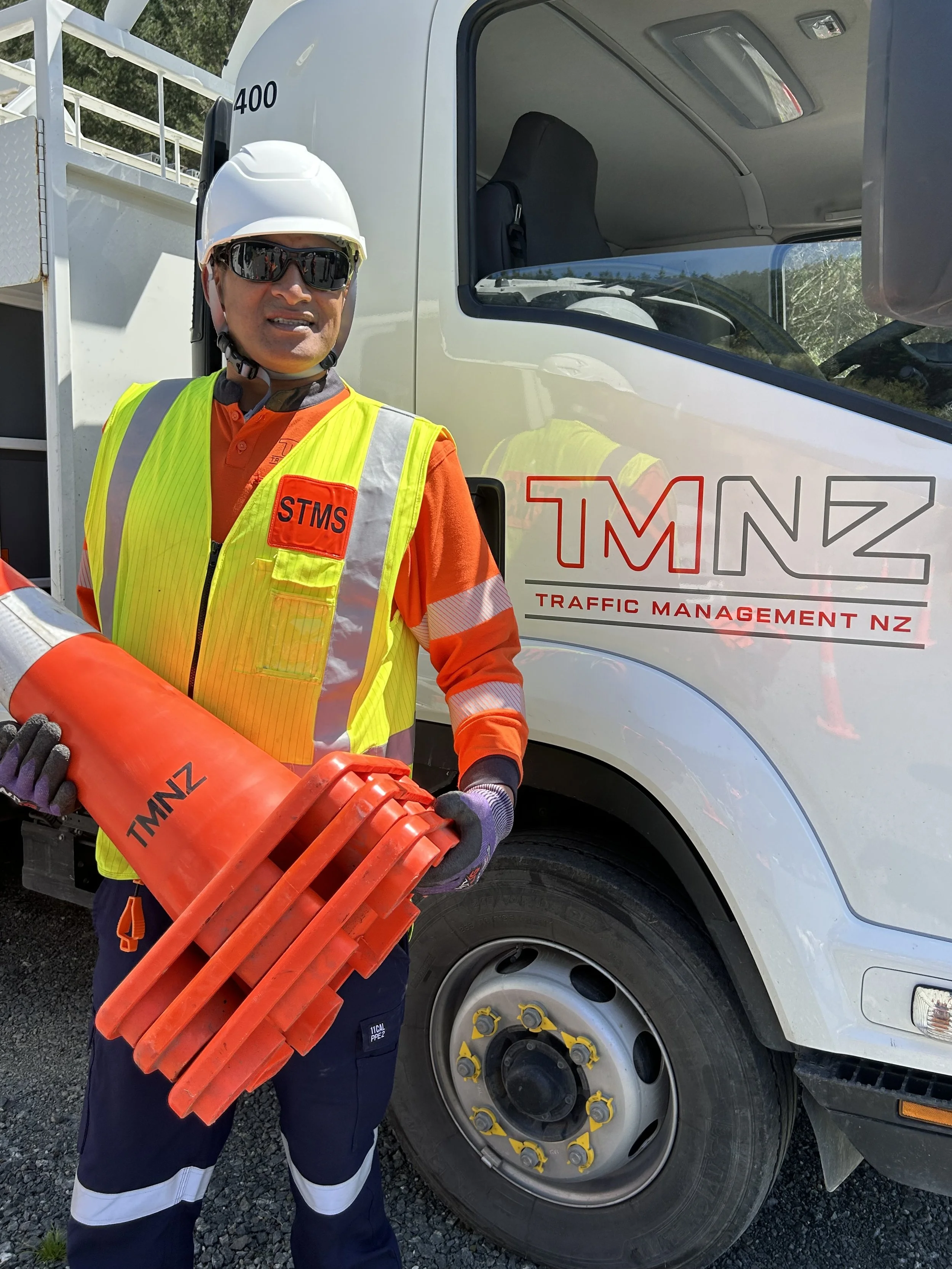
An STMS — Site Traffic Management Supervisor — is the person responsible for keeping a worksite safe when it interacts with live traffic. Every time you drive past roadworks and see cones, signs, and someone directing traffic with clear authority, there's likely an STMS behind the scenes making sure that setup is compliant, safe, and running smoothly.
In practical terms, the STMS manages the Temporary Traffic Management Plan (TMP) for the site. That means making sure the right plan is in place, that it's actually being followed on the ground, and that it meets the standards set out in the New Zealand Guide to Temporary Traffic Management (NZGTTM). It's a role that blends hands-on fieldwork with genuine leadership responsibility — you're not just managing traffic, you're managing people, safety and compliance all at once.
What Does the Day-to-Day Look Like?
No two days on site are identical, but here's a realistic picture of what an STMS is doing throughout a shift:
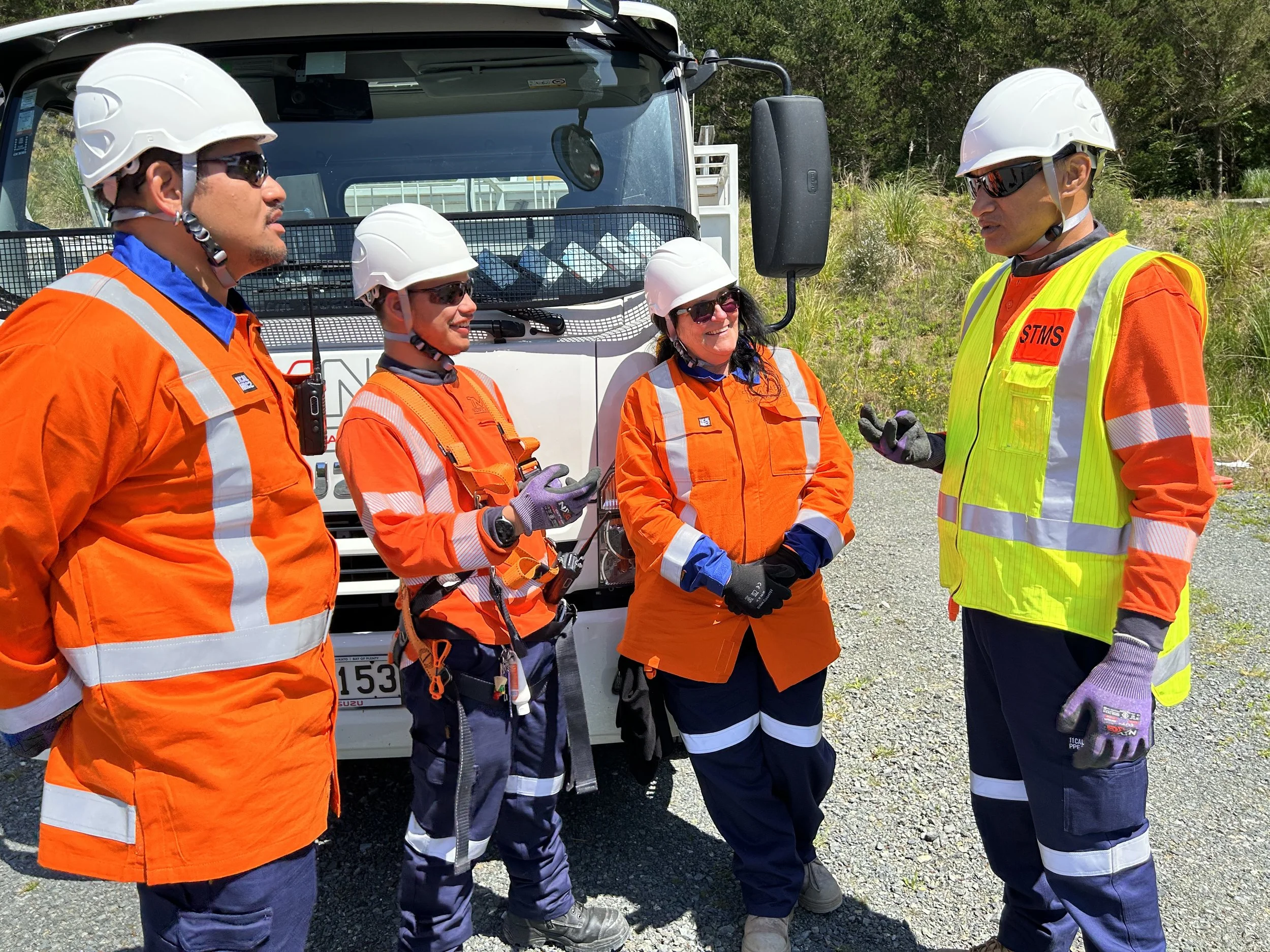
Leading the crew. You're supervising traffic management workers and making sure everyone on site — including visitors — is wearing the right PPE and following safety procedures. You're also the one holding the team to the standards expected of them, while keeping morale and motivation up.
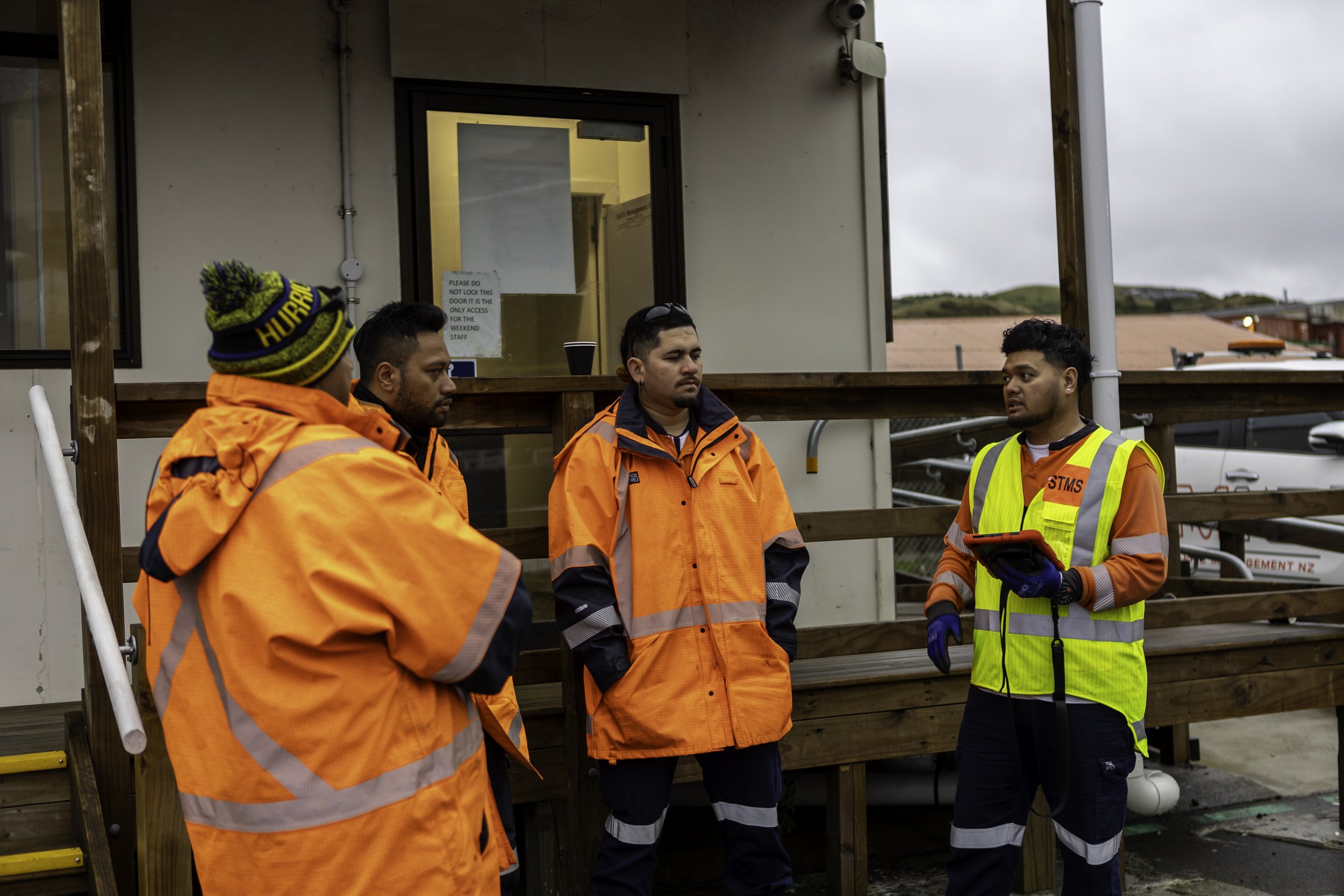
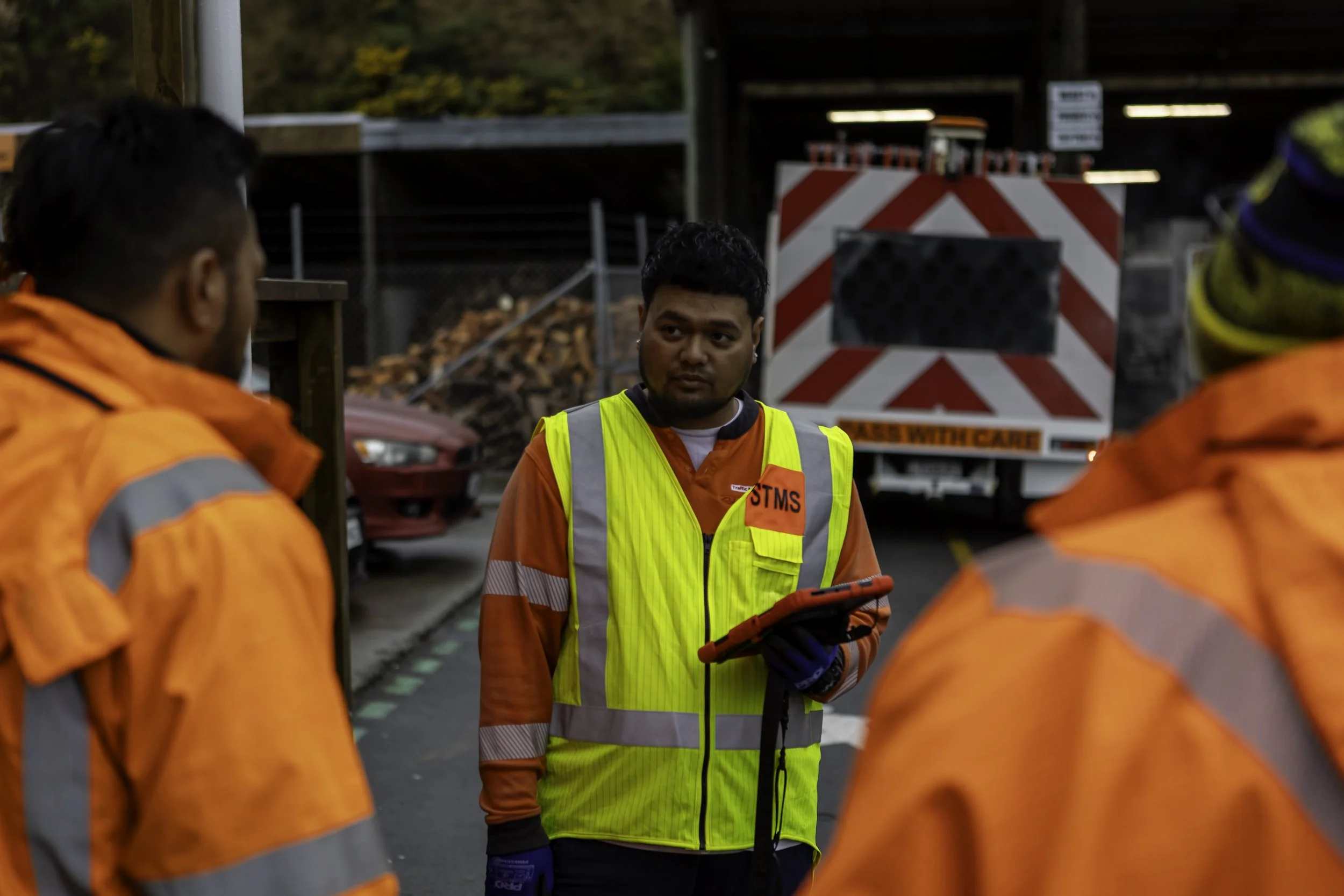
Running the safety side of things. This includes conducting site inductions so every worker understands the hazards they're walking into, holding on-site briefings at the start of each setup (and again daily, or whenever site conditions change), and reporting and investigating any incidents, hazards or near-misses.
Setting up and adjusting traffic control. You'll be installing and operating temporary traffic management measures across a variety of sites and adapting the TMP when site conditions shift — because they always do.
Handling the paperwork. STMS work isn't just physical — there's real documentation responsibility. That means completing site reports, TMP paperwork and incident records accurately, and correctly applying local TMP/TMD/CAR/WAP documentation relevant to the site.
Being the point of contact. You'll regularly liaise with clients, subcontractors and the public, so clear communication is a big part of the job — not just barking instructions, but explaining, reassuring and problem-solving on the fly.
Beyond the site. Depending on the role, you might also be rostered for call-outs (including nights and weekends), support branch maintenance and stock-taking, or assist the Events division during busy periods.
The Non-Negotiables: Safety Culture
TMNZ operates under a set of Life Saving Rules, and as an STMS, you're expected to actively champion them — not just follow them. These include things like staying alcohol and drug-free at work, driving to conditions, maintaining exclusion zones around machinery, never using a mobile phone while directing traffic, and minimising exposure to live traffic wherever possible.
If safety leadership is something you take seriously — not just as a checklist, but as a mindset — that's exactly the kind of attitude TMNZ is looking for.
What You'll Need to Qualify
Here's what's essential for the role:
Current STMS qualification — this is non-negotiable. Specifically, a full-time active Level 1 Practicing STMS certification, or a Category B STMS certification.
In-depth knowledge of the NZGTTM and a solid understanding of the responsibilities and powers of an STMS under CoPTTM.
A valid NZ Class 1 driver's licence (full licence, not restricted).
NZ residency or a valid NZ work visa.
Physical fitness — this is an outdoor, physically active role in all weather conditions.
Availability for flexible work, including days, nights, and weekends when rostered.
It's also worth knowing what will make your application stand out even further, even if it's not strictly required:
A Class 2 driver's licence
Level 2/3 Practicing STMS certification, or Category A & C certification
Prior hands-on experience as a TTM worker or in an STMS position, particularly within civil infrastructure or construction.
What Makes an Application Stand Out
In addition to the required qualifications, we recommend uploading a detailed resume and/or including further information in the application comments section. All information provided is subject to verification, so please ensure it is accurate.
Show your safety mindset, not just your safety record. Anyone can say "I follow procedures." Stronger applications demonstrate a genuine safety leadership attitude — talk about times you've identified a hazard before it became a problem, or made a call that prioritised safety even when it wasn't the easiest option.
Highlight communication skills with real examples. This role involves constant interaction with crews, clients, subcontractors, and the public — often in situations where people are frustrated about delays or detours. If you've got experience defusing tension, explaining a situation clearly, or keeping a team aligned under pressure, say so specifically.
Demonstrate reliability. Because call-outs and rostered night/weekend work are part of the job, hiring managers want confidence that you'll show up when it counts. If your work history reflects strong attendance and dependability, make that visible.
Don't undersell your paperwork skills. It's easy to focus an application entirely on the physical, on-the-ground side of the job and forget to mention documentation, reporting, or admin experience. STMS work has a real compliance backbone — showing you're comfortable and accurate with paperwork matters.
Be upfront about your certification level. Clearly state your current STMS certification level and licence class right at the top of your application or CV — this is often the first thing being checked, and burying it makes it harder for a recruiter to move quickly on your application.
Show initiative and problem-solving. TMNZ values people who spot issues and act on solutions without waiting to be told. If you've got an example of improving a process, catching an issue early, or making a smart call on the fly, include it.
Is This Role Right for You?
If you enjoy being outdoors, thrive on variety rather than routine, take genuine pride in keeping people safe, and are comfortable stepping into a leadership role on-site, an STMS position could be a great fit. It's physically demanding and the hours can be unpredictable, but it's also a role with real responsibility and impact — every shift, you're the person making sure everyone on that site gets home safely.