
Why Does Road User Behaviour Around Cones and Signs Still Put Road Crews at Risk?
If you drive anywhere in New Zealand, you have probably passed a worksite this week. The cones, signs and temporary speed limits are there for one reason: to give the crew a safe space to work right next to live traffic. But that equipment only works when drivers respond to it. Speeding, distraction and impatience around worksites remain some of the biggest risks our people face on the road, and they are risks no Traffic Management Plan (TMP) can fully design out. Here is what goes wrong, why it matters, and what you can do next time you are behind the wheel.
What Are Cones and Signs Actually Designed to Do?
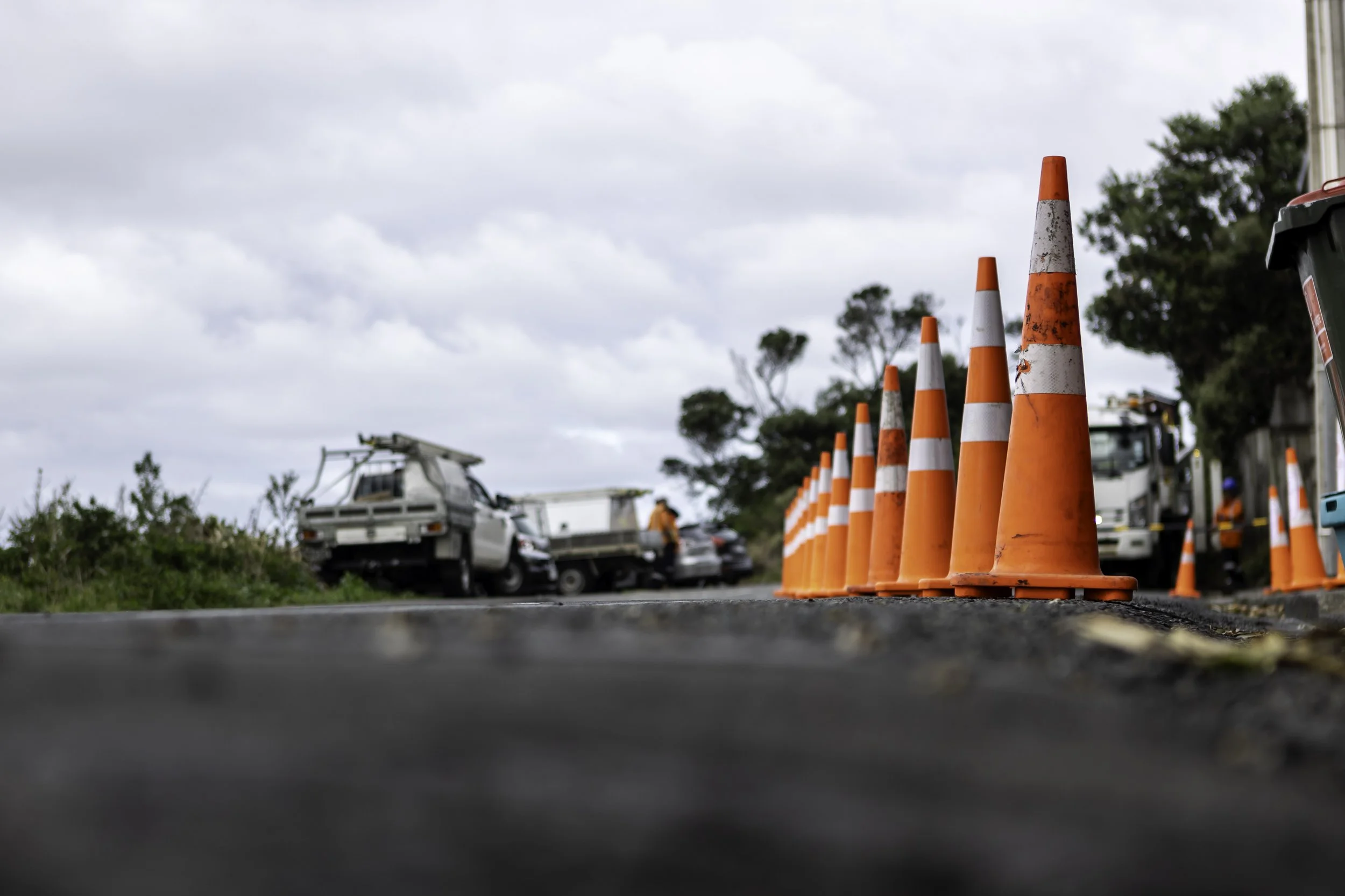
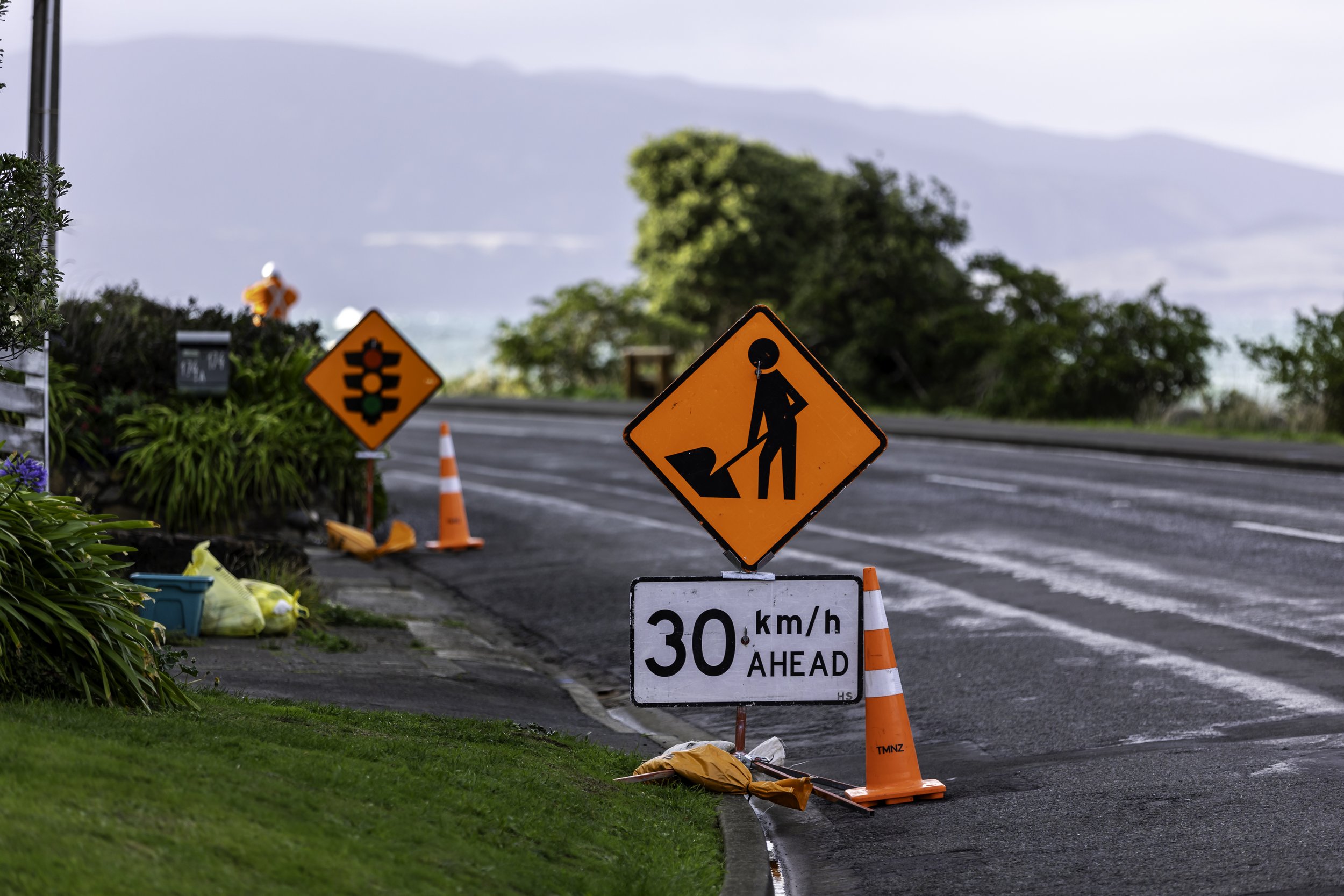
Cones, signs and temporary speed limits are a warning and guidance system, not a physical barrier. They tell you the road layout has changed, bring your speed down to a point where you can react, and guide you safely around the work area.
Every temporary traffic management (TTM) layout is built to Waka Kotahi (NZTA) requirements, now set out in the New Zealand Guide to Temporary Traffic Management (NZGTTM). Sign spacing, taper lengths and safety zones are all calculated on the assumption that drivers will slow down when asked. A road cone weighs a few kilograms. It can guide a car, but it cannot stop one.
Which Driver Behaviours Put Crews at the Most Risk?
Most drivers get it right through worksites. The ones who do not tend to fall into four patterns, and our crews see all of them every week.
Speeding through temporary limits. This is the big one. NZTA has reported contractors in regions including the Bay of Plenty and Otago noticing significant increases in drivers ignoring temporary speed limits. Higher speeds mean longer stopping distances, loose chip flicked up at workers, and cones clipped and sent flying across the site.
Distraction. Worksite layouts change quickly: a lane shift here, a narrowed lane there. At 50 km/h, a two-second glance at a phone means close to 30 metres travelled without looking at the road. That is easily the distance between the last warning sign and the first worker.
Impatience at stop/go. Creeping forward, rolling through before the paddle turns, or tailgating the car ahead to "make the gap." NZTA has publicly noted stop/go operators reporting drivers going through on STOP almost daily in some areas.
"Nobody’s working, so it doesn’t apply." Temporary limits often stay in place after hours because the hazards do: fresh chipseal, loose metal, edge drop-offs, or workers out of sight behind equipment.
What Happens When Drivers Ignore Signage or a Traffic Controller’s Direction?
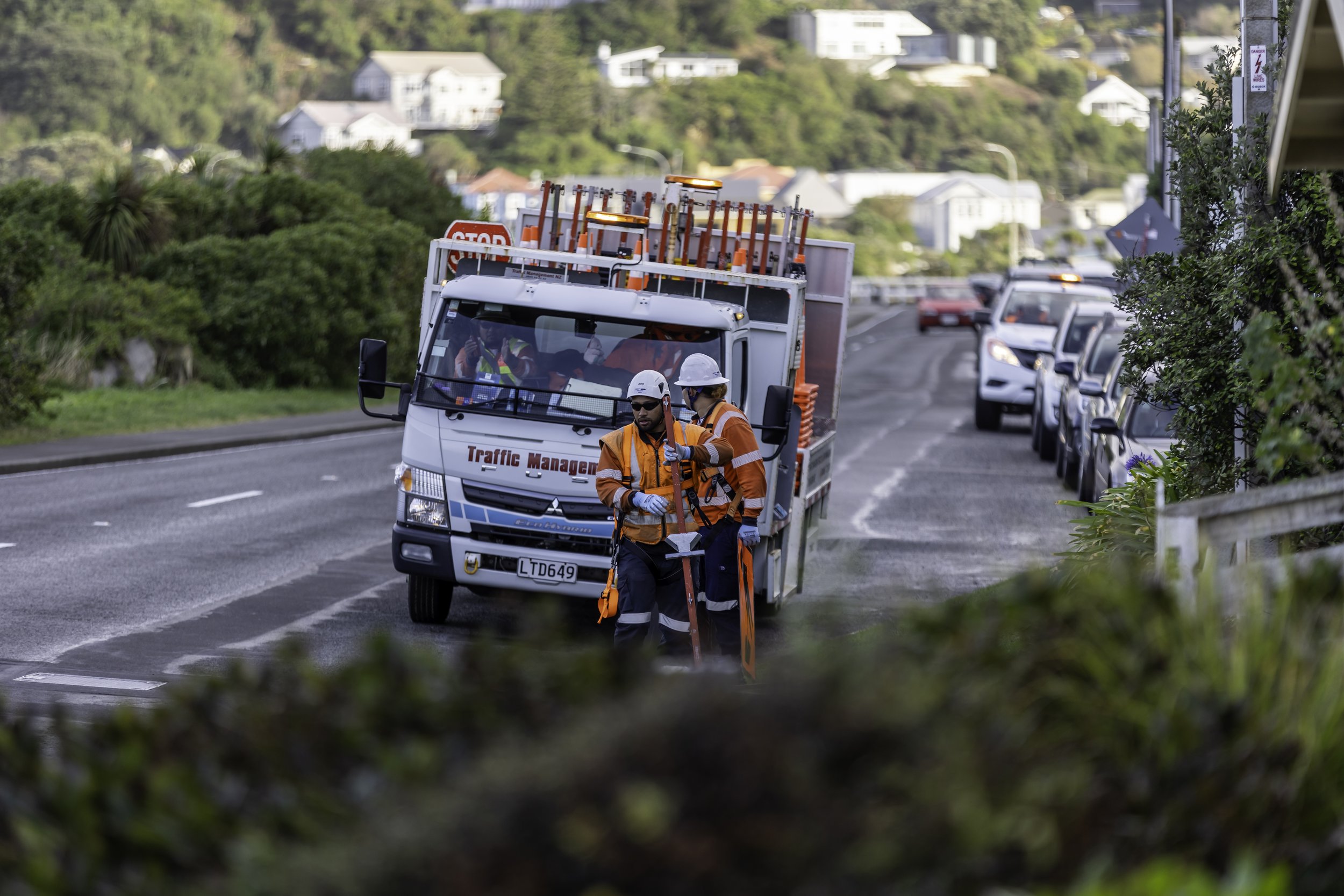
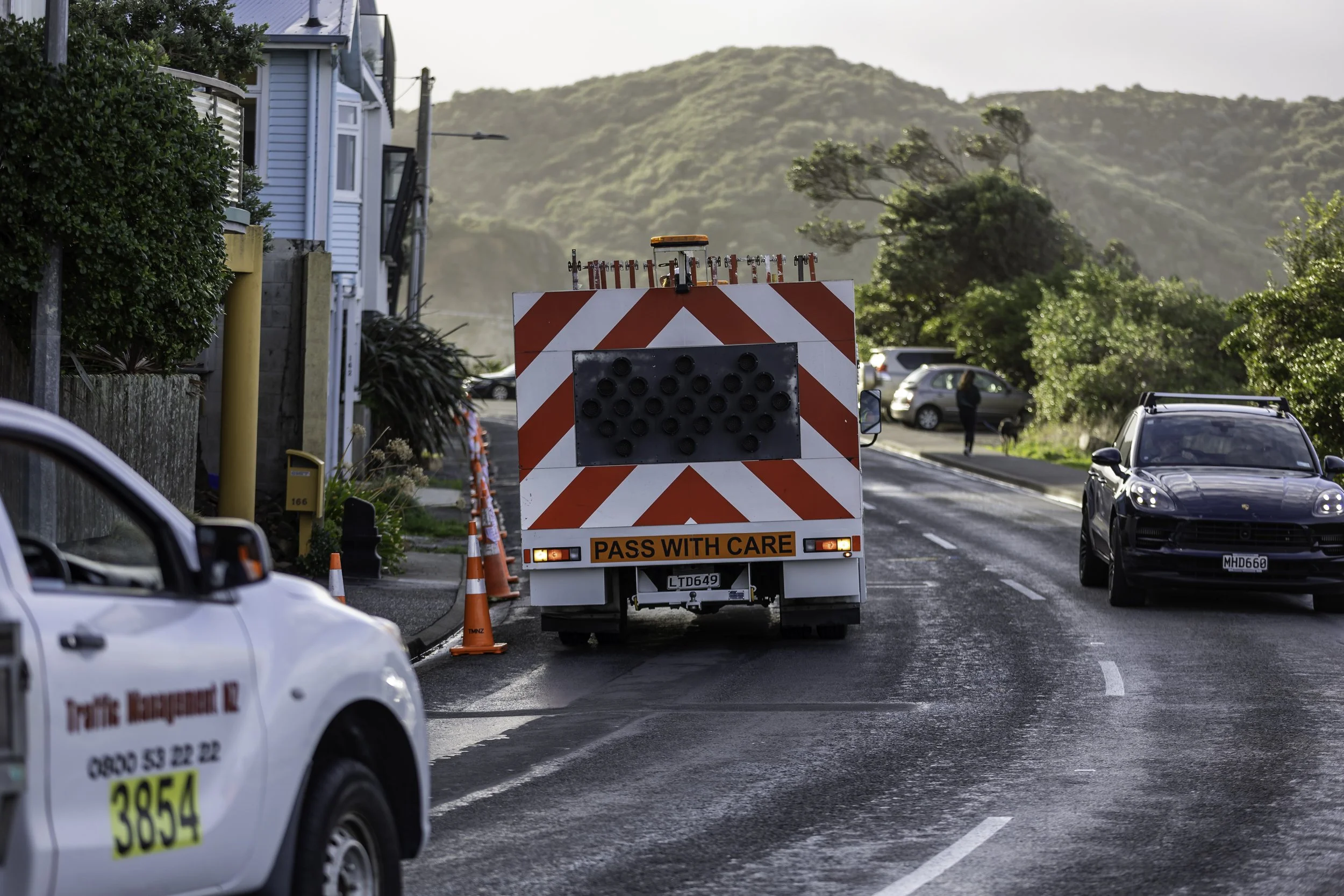
When a driver ignores the signs, the safety margin built into the layout disappears, and the person standing closest to the traffic is the one exposed. A traffic controller often works metres from moving vehicles with a sign, hi-vis and their own judgement. There is nothing else between them and a car that does not stop.
The consequences are real and recent. In March 2026, Canterbury Police launched Operation Safe Works after a roadworker on a drilling rig was struck by a car travelling too fast, and a driver died after crashing into vehicles queued at temporary lights near Waikuku. In 2024, a roading worker in Waharoa, Waikato, was critically injured when an SUV drove through a worksite at speed.
Most incidents never make the news. They are near misses: a car that stops a metre too late, a cone that clips a worker’s leg, a driver who swerves around a stop/go operator. Each one leaves a crew shaken, often stops work on site, and makes the delay longer for everyone else in the queue.
How Should You Drive Through a Roadworks Site?
Slow down early, put your phone away, and follow the signs and the traffic controller, even if the site looks quiet. In practice, that looks like this:
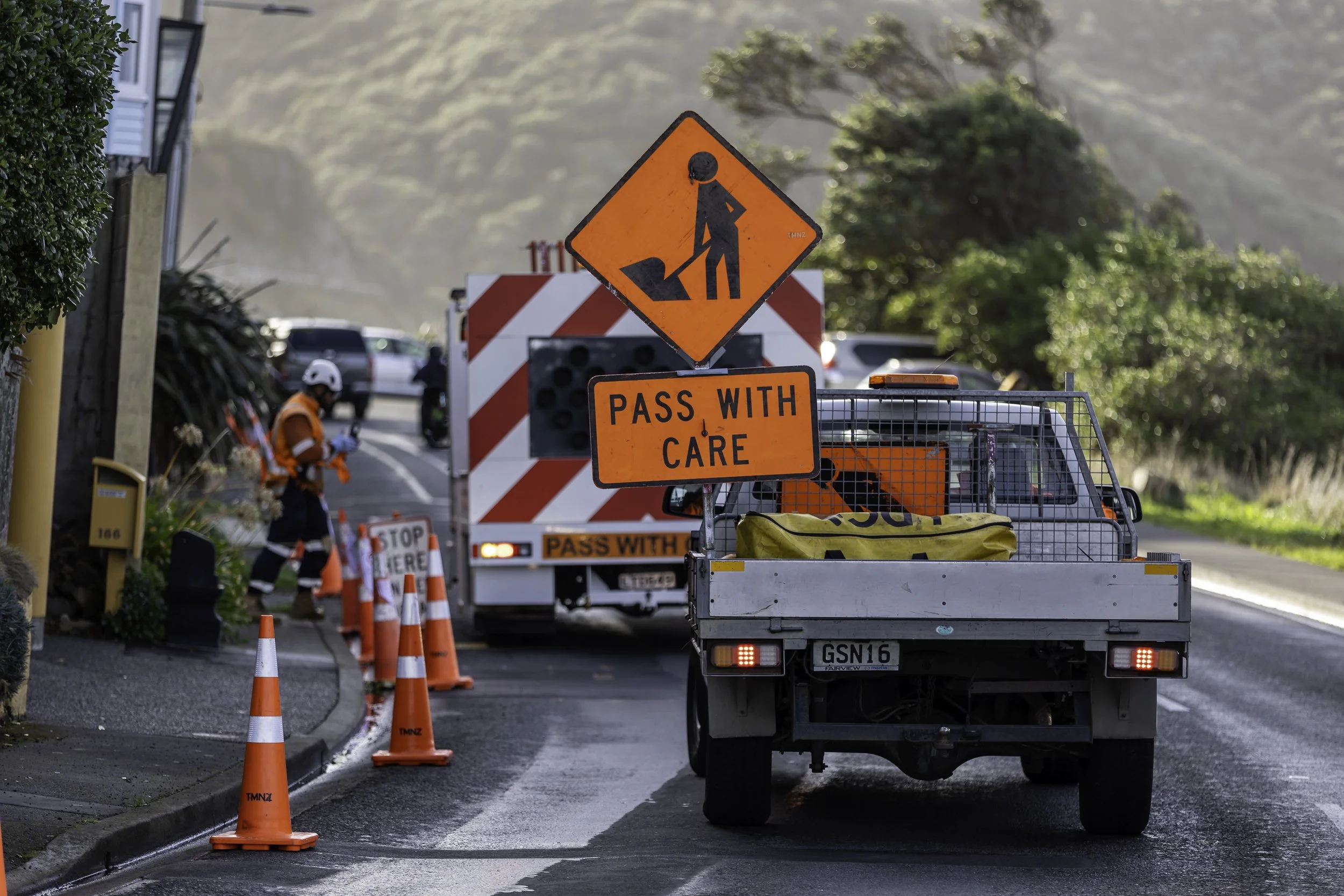
Slow down at the first sign, not the last cone. Advance warning signs are placed where they are so you have time to brake smoothly, not suddenly.
Treat the temporary limit as the limit. A 30 km/h sign is not a suggestion, and Police do run enforcement operations at worksites.
Keep your eyes up. Phone down, navigation set before you leave. Layouts can change from one day to the next on the same stretch of road.
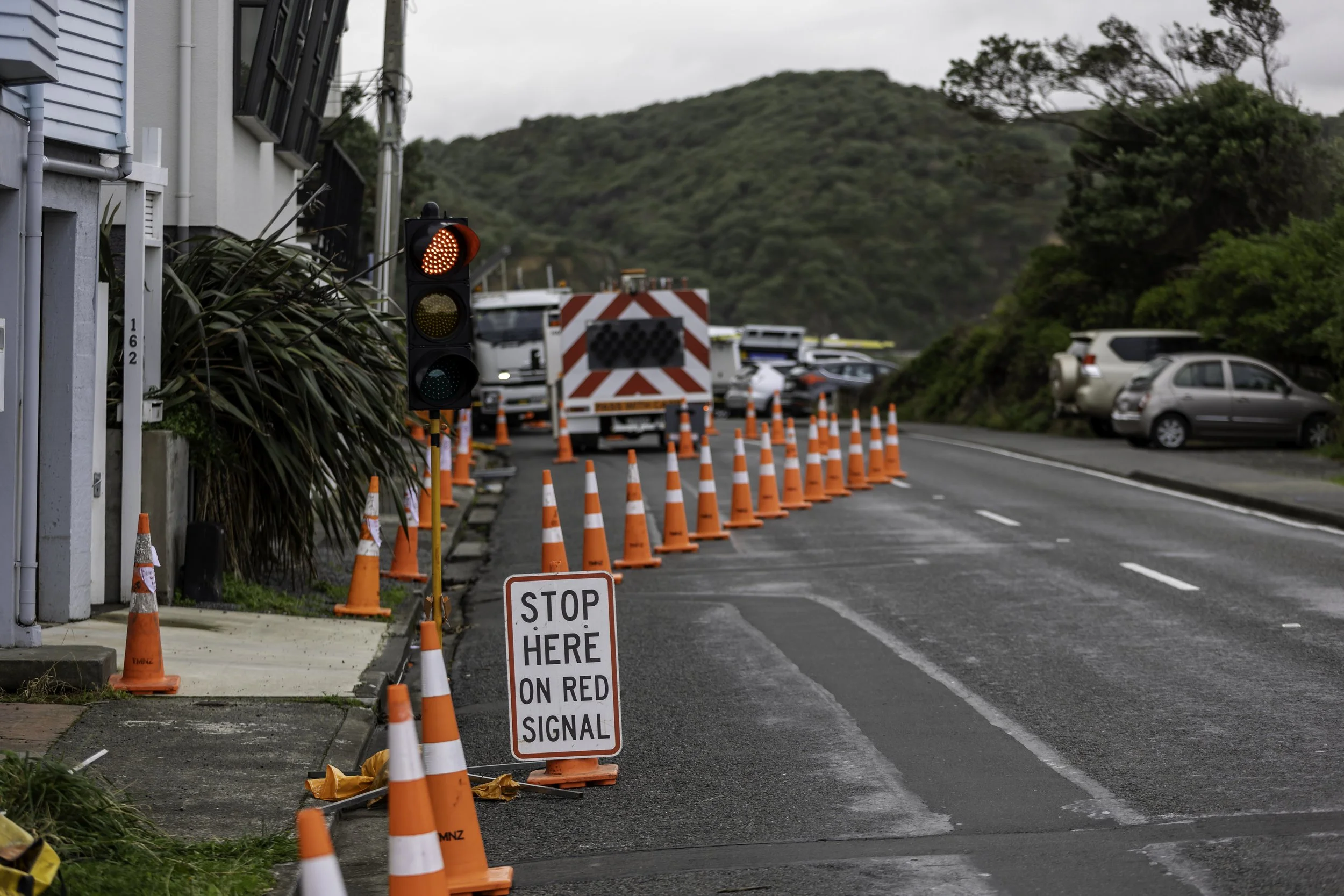
Wait for the paddle to turn. At a stop/go, stop at the sign and stay there until it shows GO. The controller is managing a single lane, and traffic may be coming the other way.
Give the crew room. Stay in the marked path, keep a gap to the car ahead, and do not try to squeeze past machinery.
Assume someone is there. If you cannot see workers, they may be behind a truck, in a trench, or on the shoulder.
Build in a few extra minutes. Checking the NZTA Journey Planner before you leave takes the pressure off. A few minutes of delay is a far better outcome than the alternative.
How TMNZ Plans Worksites Around Real Driver Behaviour
Good temporary traffic management starts from the assumption that not every driver will get it right. With more than 20 years in the industry and a nationwide branch network, TMNZ designs layouts with that in mind: advance warning, clear sightlines, safety zones sized to the speed environment, and crews led by an experienced STMS (Site Traffic Management Supervisor).
Our Life Saving Rules set the non-negotiables for every person on site, and near misses involving road users are reported so layouts and practices keep improving. Read more about how TMNZ approaches safety and who we are.
SOURCES
NZTA media release: Waka Kotahi urges BOP road users to slow down at sign of road works. nzta.govt.nz
NZTA media release: Policing effort nets multiple offenders in Otago at roadworks sites. nzta.govt.nz
NZTA media release: Motorists urged to be considerate of stop/go operators (Gisborne). nzta.govt.nz
1News, 4 March 2026: Drivers filmed speeding through roadworks in Christchurch (Operation Safe Works). 1news.co.nz
SafetyCulture, 15 Jan 2024: Road worker critically injured by speeding vehicle in Waikato (Waharoa). safetyculture.com