
How Does New Zealand Weather Affect Your Traffic Management Plan?
Weather is not a delay you absorb after the fact. It is a site condition your traffic management provider should be planning for before your project starts, because rain, wind, fog, ice and snow all change how safely and how legally a worksite can operate. If you are engaging a traffic management provider anywhere in New Zealand, here is what you need to know before you sign off on a plan, a price or a shift schedule.
Why Should You Factor Weather Into Your Traffic Management Planning?
Because it changes what your provider is legally required to deliver, not just how comfortable the crew is. Under the risk-based approach in the New Zealand Guide to Temporary Traffic Management (NZGTTM), a Traffic Management Plan (TMP) has to reflect the actual conditions of the site, not a standard layout applied regardless of the day. A plan written for a dry Tuesday in March does not automatically cover a wet Thursday in July.
For you as the client, that has three practical consequences:
Cost. A weather-ready setup, taller delineation for snow, weighted bases for wind, extra lighting for fog, can cost more than a fair weather one. Budgeting for it upfront avoids a surprised conversation mid project.
Schedule. A provider who has planned for weather can often keep working through conditions that would otherwise stop a job cold, because the setup and the crew are already resourced for it. One who has not planned for it will be reacting in real time, usually at your expense and not budgeted for.
Liability. If a setup fails because it was not built for the conditions it actually faced, the risk does not stay with the traffic management company alone. As the principal or client commissioning the work, you have your own obligations under health and safety law to engage a competent provider and to satisfy yourself the work is being done safely.
What Weather Conditions Should You Expect Your Provider to Plan For?
New Zealand's geography means most projects of any length will meet more than one of these conditions, sometimes in the same shift.
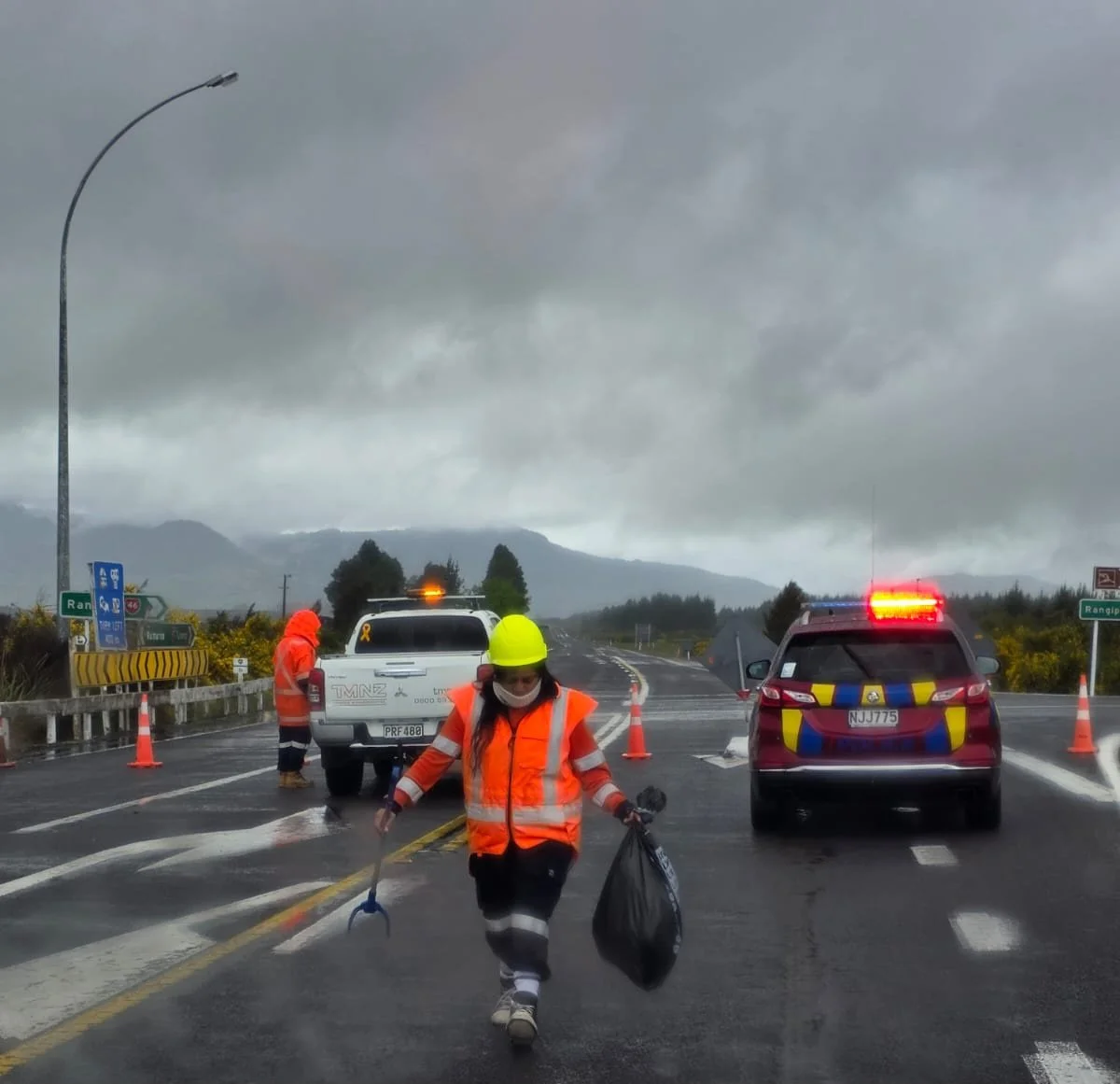
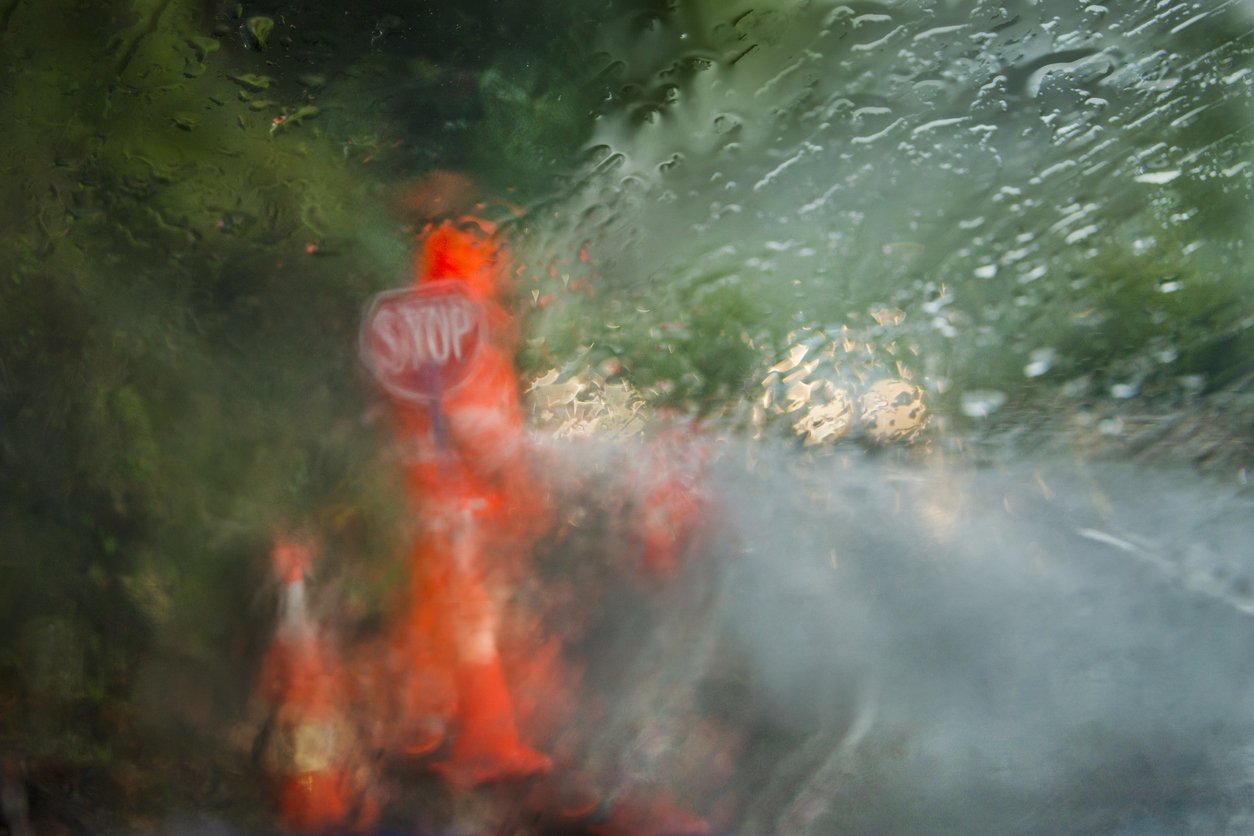
Rain: Rain shortens the distance drivers can see a setup and lengthens the distance they need to stop. A competent provider extends advance warning where the road geometry allows it, keeps signs clean so retroreflective faces still work at night, and manages standing water and mud tracked from site as its own hazard. If your project runs through winter, ask how devices are kept visible and clean over a multi week job, not just on day one.
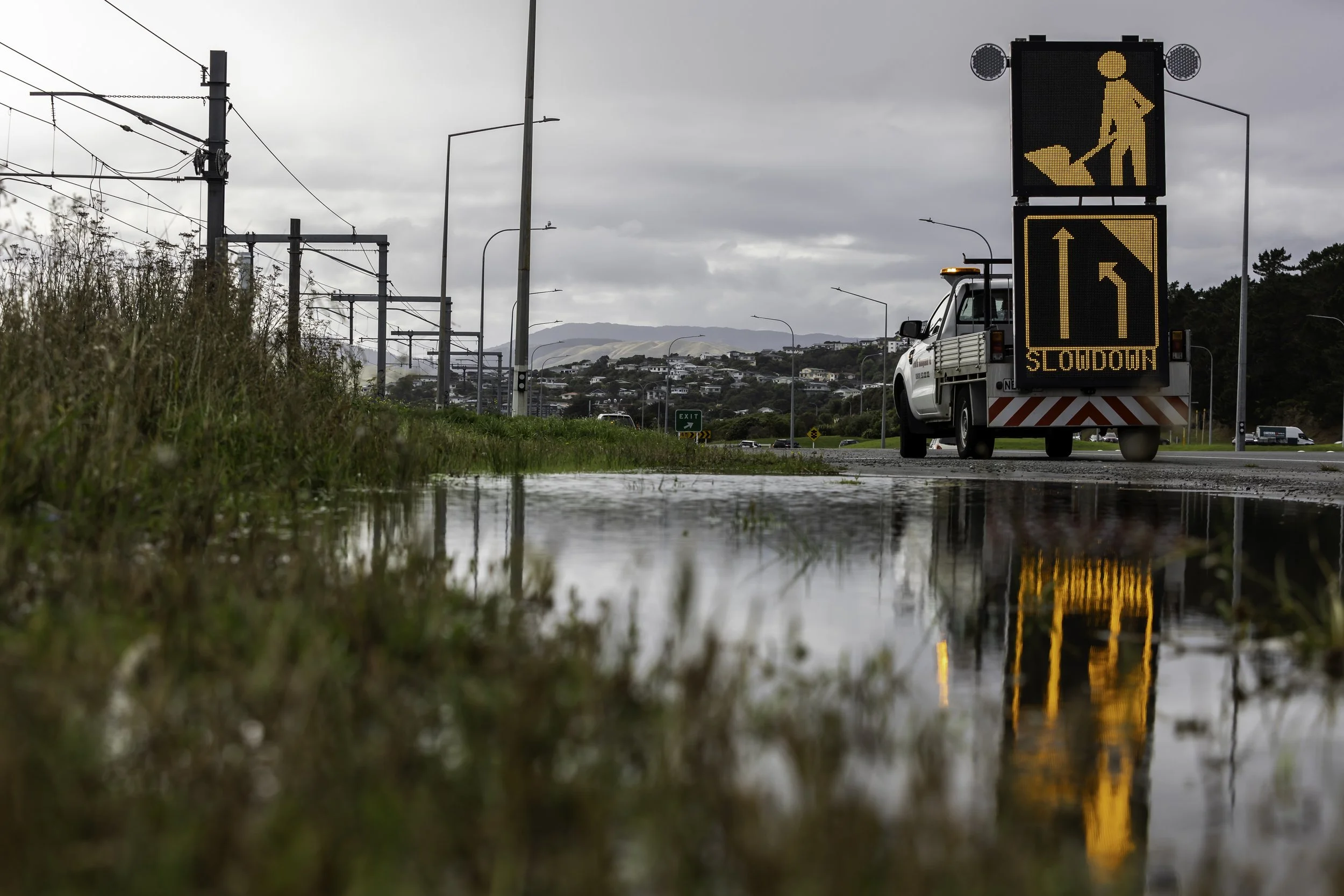
Wind: Wind is the most common reason a setup stops matching the plan that was approved. Signs rotate, cones and barrier boards migrate, and large boards such as variable message signs act like sails. Exposed coastal roads, ridgelines and gully corridors like Wellington regularly produce gusts well above the regional forecast. A provider working in these environments should be walking the site more often when wind is up, and should treat resetting devices as a scheduled task, not an interruption.
Snow and ice: Snow and ice are the conditions most likely to break a setup outright. Snow buries low level delineation such as cones, sometimes in a single pass of a plough clearing the adjacent lane, which is why taller devices and higher mounted signs matter on alpine and high-country routes. Ice extends stopping distances well beyond what a dry weather layout assumes, and it forms unevenly: a shaded cutting or a bridge deck can be frozen while the rest of the road looks clear. If your project runs through a South Island pass, the central plateau, or any route that closes at short notice in winter, ask your provider how their contingency plan handles a road closure mid shift, not just the setup itself.
Fog and low light: Fog collapses advance warning to whatever a driver can actually see, which on a bad morning can be less than their stopping distance. Low winter sun causes a similar problem on east and west facing approaches for a short but predictable window each day. The response is earlier warning, closer device spacing, and in persistent fog, an honest conversation about whether the work should wait.
What Should You Ask a Traffic Management Provider About Weather Contingency?
This is where a genuinely prepared provider separates itself from one quoting to a minimum. Before you engage anyone, ask:
Is weather built into the TMP, or bolted on later? The contingency section of your plan should name specific triggers and responses, not a generic line about “monitoring conditions.”
Who makes the call to stand a site down, and how is it recorded? The decision should sit with the person supervising the site, and it should be documented at the time. A provider who cannot describe this process clearly has not thought it through.
What happens if the road closes while your crew is on site? This matters on alpine and high country routes in particular, where conditions can close a route mid shift with little warning.
How are inspection intervals adjusted when conditions are marginal? Wind, rain and ice all call for more frequent site checks. Ask how that gets resourced, not just promised.
What equipment is selected for the conditions, and is it already in inventory? Weighted bases, taller delineation and additional lighting need to exist before the job starts, not be sourced once conditions turn.
Who Decides When a Site Stands Down, and What Does That Mean for Your Project?
The decision belongs to the person supervising the site, based on whether the setup can still be relied on to protect the people inside it.
Useful triggers a good provider agrees with you before the shift starts include devices being displaced faster than the crew can reset them, drivers visibly not responding to the setup, the crew not being visible at the distance the setup assumes, ice forming on the approach, or severe wind forecast inside the shift window.
Standing a site down costs time and money, and nobody enjoys that call. It costs less than the alternative. If a provider never recommends it, that is not a sign they manage weather well. It is a sign they are not paying attention.
How Should You Plan for Weather Before the Job Starts?
Agree these points with your provider before mobilisation, not once conditions turn:
Check the forecast against your actual shift window, not just the day. A front arriving at 4pm affects a night shift differently to a day shift.
Confirm weather is built into the risk assessment and the TMP contingency, with named triggers rather than a general monitoring statement.
Agree stop work triggers together, so the first conversation about standing a site down is not happening while it is raining.
Confirm the right devices are selected for the conditions: weighted bases in wind, taller delineation in snow, additional lighting for fog and long night shifts.
Ask about inspection intervals when conditions are marginal, and how the crew is resourced to meet them.
Confirm who has the authority to make the call on site, and that person is actually rostered on, not off site or unreachable.
All Conditions Traffic Management Services from TMNZ
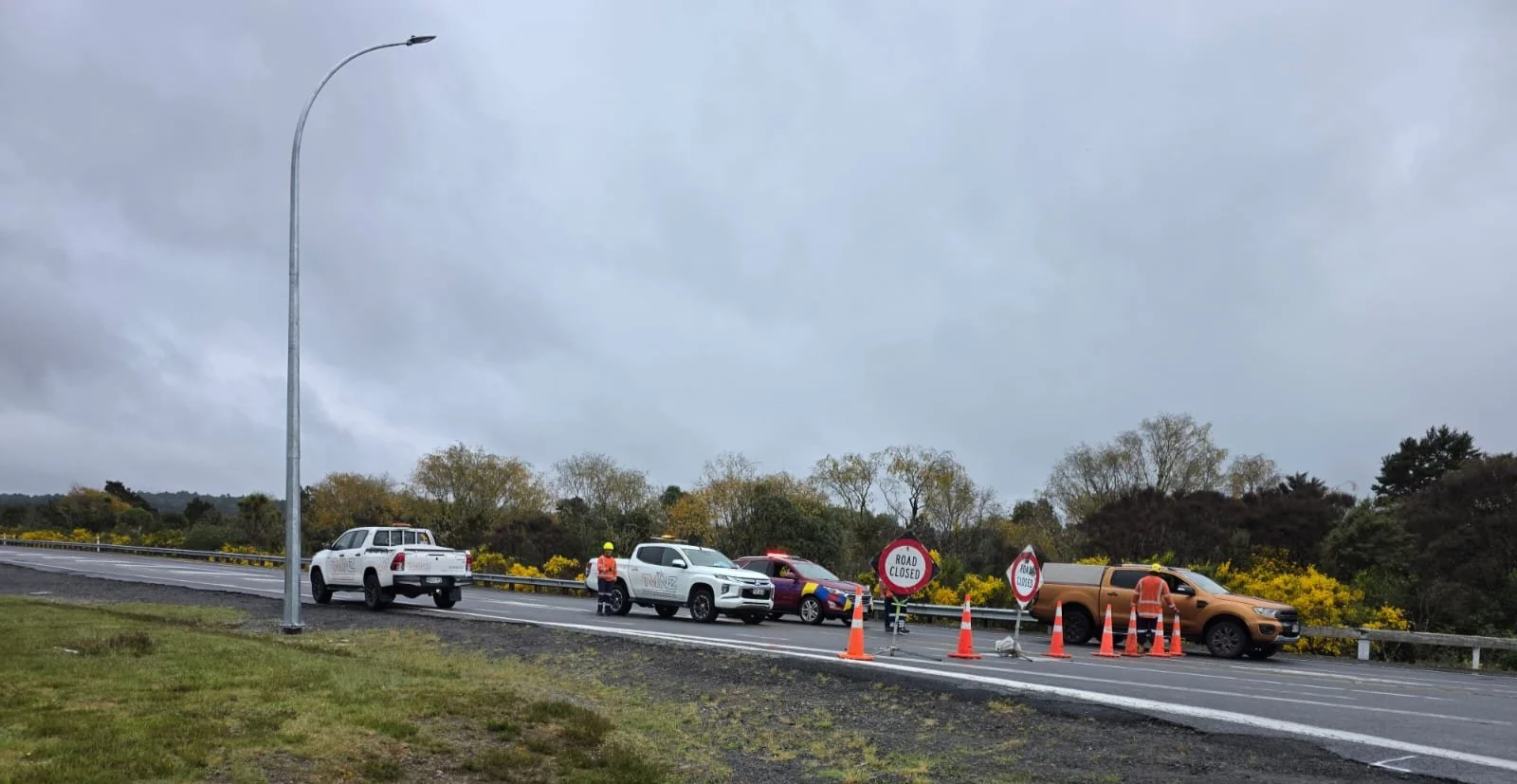
TMNZ delivers temporary traffic management for all road types, locations and times of day, across 22 regions from a branch network spanning both islands. That covers everything from summer event work in the middle of a city to winter maintenance on exposed inland routes, which is why weather planning is built into how TMNZ sets up a site rather than added once the forecast turns.
With more than twenty years in the New Zealand industry and the largest resource base in the country, TMNZ can resource the parts of weather planning that are easy to promise and harder to deliver: shorter inspection intervals when conditions are marginal, crew rotation on long cold shifts, and equipment that stays visible when conditions do not cooperate.
Frequently asked questions about Weather and Traffic Management
Does a Traffic Management Plan need to say what happens in bad weather?
Under NZGTTM the plan is expected to reflect the risks of your specific site, and in most New Zealand conditions weather is one of them. As a client, ask to see the contingency section directly. A plan that names specific triggers and responses is far more useful to you than a generic line about monitoring conditions.
Can traffic management continue in snow?
Often yes, with the right setup, the right devices and a crew equipped for it. What changes is the geometry, the visibility of the delineation and how often the site needs checking. What should not change is that continuing is a deliberate, documented decision, not a default.
Who decides to stand a site down, and can I ask my provider to keep working?
The decision belongs to the person supervising the site. You can raise concerns, but the call sits with whoever is accountable for the setup. A provider who lets a client override that call on safety grounds is one to be cautious of.
Will I pay more for traffic management in winter or bad weather?
Often yes, because the setup needs different equipment and more frequent checking. Ask your provider to itemise what weather resilience adds to the price, so it is a planned cost rather than a surprise variation.
Do I need to ask for more signs in wet weather, or something else?
More often the fix is earlier and cleaner signage rather than simply more devices. Ask whether your provider extends advance warning where the road geometry allows it, and how they keep retroreflective faces clean on longer jobs.